
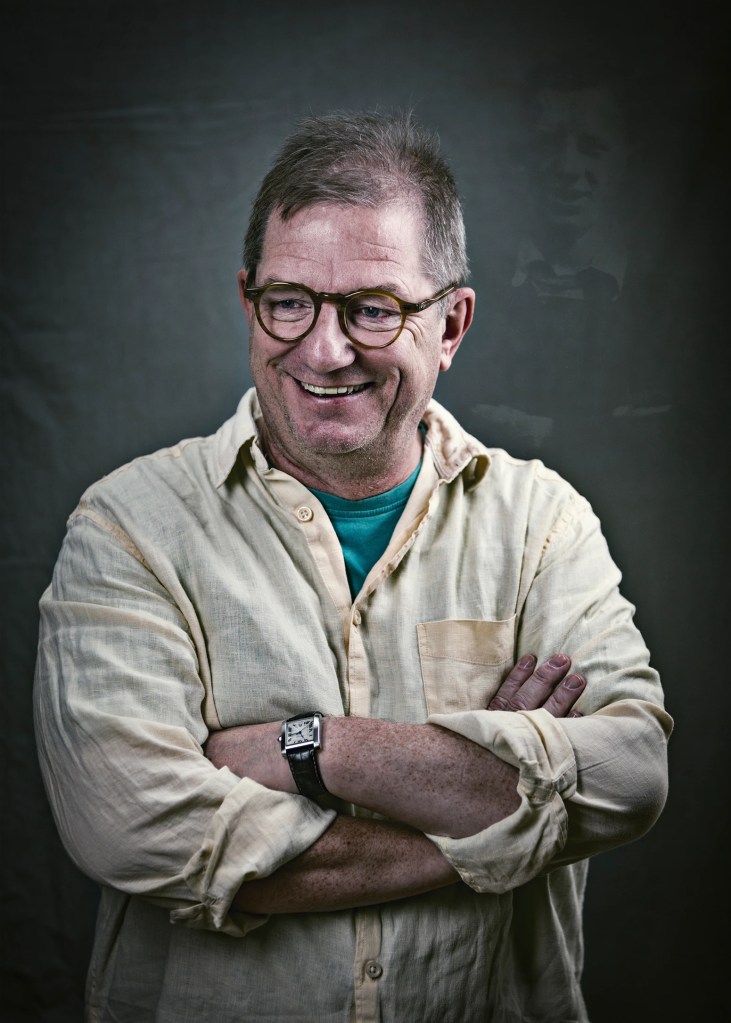
Stephen Dunn’s success in his professional life lay in Human Resources, and all who knew him will tell you that the emphasis was aways on “human”.
He was that rarest of men – a quiet inspiration. No grandstanding for him, nor overblown rhetoric, just an innate understanding of what needed to be done, and a determination to do what was necessary to complete the task – without fuss or drawing attention to himself.
He was a club Director at Hibernian Football. Club for three different periods. I got to know him latterly through his passion for the Hibs and its history, in particular working with him on elements of equality, diversity, and supporters’ rights. I was first impressed by his commitment to doing the right thing the right way and for the right reasons. Often we use the phrase “Hibs Class” in relation to football, sometimes with tongue in cheek, but in Stephen’s case it was about integrity, and refusing to let people down, acting in a proper and considerate manner. Allied with that other most Hibernian of phrases “perseverance”, it was his solid straightforward attitude which made him so inspirational.
His leadership of so many projects in the Hibs Historical Trust was a practical and highly important demonstration of his innovative thinking and ability to get things done. Most recently, he championed and directed the sculptures of The Famous Five which are nearing completion, and it is fitting to think there will now always be a sixth name linked to “our greatest men”.
I often think that the great folk of the past tend to have their memories honoured and preserved by the great folk of today. Stephen’s work in supporting St Patrick’s Branch Supporters’ Club’s cooperation with Ballingarry AFC in the hometown of Hibernian’s founder, Edward Canon Hannan, was pivotal in ensuring the club’s link with the Co Limerick town is fostered and recognised, and that the founder’s birthplace is aware of his influence – in education, as well as church and football, in Scotland’s capital.
Such links, as is the case with many of the Hibs Historical Trust’s projects, are not nurtured casually. They take hard work, detailed planning, and firm commitment to see them through and to preserve them for the club’s supporters of the future. Stephen’s talents were well suited to the task, as was recognised by all involved in visits between Edinburgh and Ballingarry.
However, as I got to know him in the last year or two, I started to discover the range of his various passions and activities, many of which we had in common. He was on the Boards of the Edinburgh Lyceum and the Glasgow Citizens Theatres and worked tirelessly to promote the drama sector in Scottish life, bringing together theatres, performers and administrators. We both had a particular liking for the work of Arthur Miller and discussed, in particular, “Death of a Salesman”, where I appreciated his insights. His musical tastes largely tallied with mine and he was widely read and knowledgeable about many aspects of music.
But, after Hibs, perhaps his greatest passion was for photography – in which area he had great talent, naturally focussing on people, through portraits. Such was his interest in the medium that he completed a degree in photography in 2020 and taught and encouraged many youngsters in their photographic studies – even bringing groups along to Under 18 and Development Squad games at the Hibernian Training Centre so they could practise elements of sports photography.
Edinburgh College Photography Department have long acknowledged his work in this area, pointing out his, again practical, efforts to have a digital print space completed, his care, kindness and generosity towards his fellow students, and his passion for the subject. Their tribute to him is entitled “Legend” – a soubriquet at which he would have baulked, but resonates with the reality of the esteem in which he was held by all.
When they wished to record his name in the new Digital Centre to acknowledge his role in its completion, he demurred, asking that a Jack Lemmon quote, which could well be his epitaph, be used instead: “No matter how successful you get, always send the elevator back down.”
We discovered one other shared, and rather odd, obsession – and that was with football ground floodlights -especially those of earlier generations. We agreed it was something to do with aesthetic shape and design and their various idiosyncrasies, linked to the excitement of games under the lights, and the way the “light in the sky” will lead you to a football ground, even in a strange town. When groundhopping, I would always make sure to insta the lights to share with Stephen, and I will continue to do so as a happy memory.

Football is becoming increasingly a ruthless, money obsessed, business – a fact that can overwhelm the original pleasures to be had in viewing a purely sporting contest, but there is still room for soul, integrity and joyful commitment.
By coincidence, we will shortly see the floodlights at Easter Rd upgraded, and the ground which installed the first floodlights in Scotland, from Edinburgh firm, Miller and Stables, in October 1954, will have lights that shine even brighter.
But none will shine brighter than Stephen Dunn – with his four pylons of Passion, Integrity, Hard work and Humanity.
We’ll keep them burning, Stephen.

 There's a light in the Sky